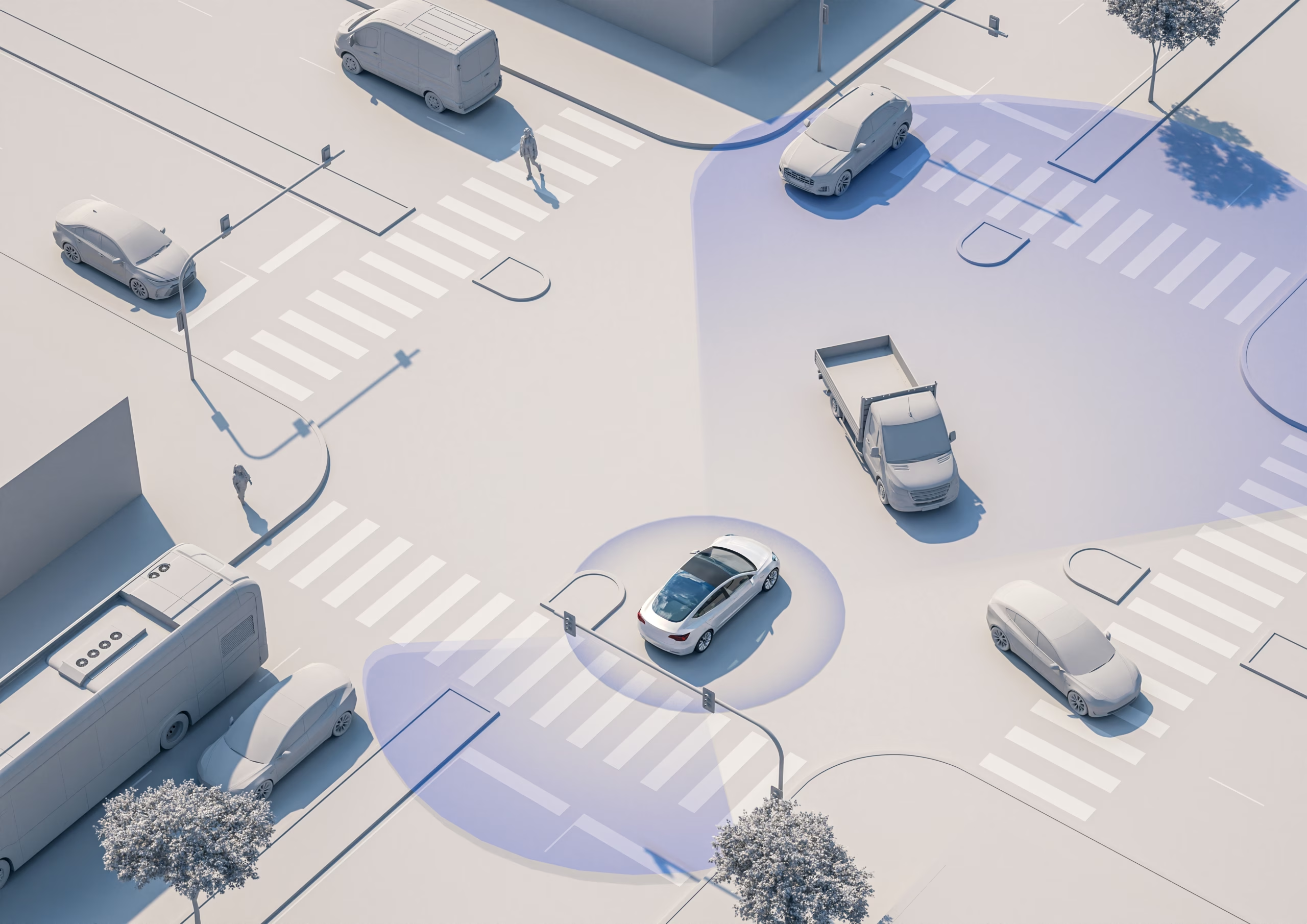
The British high street and motorways have undergone a quiet but profound transformation over the last decade. Many of us will remember the “Green Cross Code”, the construction of the Dual Carriagways, Robin Reliant cars and Leyland Motors. All of course, in the name of expansion and growth of the modern highway system and travelling for convenience. Whilst the cars of yesteryear were influenced by popular TV series’ such as CI5 the Professionals, (everyone wanted the Ford Capri) todays modern vehicles are much more complex in design. As we move further into 2026, the familiar sight of a driver behind every wheel is no longer a guaranteed reality, and the “last-mile” commute is increasingly dominated by electric micromobility.
However, technology often moves faster than the law. For pedestrians, cyclists, and motorists, the rise of autonomous vehicles (AVs) and e-scooters introduces a complex web of liability. When an accident occurs, the question is no longer just “who was at fault?” but increasingly, “what was at fault?” E-Scooters and companies that run them are insured for such contingencies, however for the lay person, the route to securing any information as to who they claim against and the details of the insurers, often requires research and google analysis. Modern traveling methods calls for updated legislation to protect all road users and pedestrians alike.
So what new legislation is there and why do we need to be aware of this?
Self-Driving Cars in 2026 — What the New UK Laws Mean
The implementation of the Automated Vehicles Act 2024 has reached a critical milestone in 2026. With commercial pilots of “robotaxis” now appearing in major hubs like London, the legal distinction between a traditional driver and a “User-in-Charge” (UiC) is the most significant change to road traffic law in a generation.
Who is Liable in an Autonomous Accident?
Under the current framework, liability is determined by the vehicle’s “mode” at the time of the incident. If a vehicle is operating in a self-driving mode authorised by the Secretary of State, the human inside is generally granted immunity from “dynamic driving” offences.
-
The Insurer’s Role: Following the Automated and Electric Vehicles Act 2018, the law provides a direct route to compensation. If an automated vehicle causes an accident, the insurer of that vehicle is initially liable to pay compensation to the victims (including the “User-in-Charge” if they are injured).
-
The Authorised Self-Driving Entity (ASDE): While the insurer pays the claim, the ultimate responsibility for the vehicle’s behaviour shifts to the ASDE—typically the manufacturer or software developer. They are legally mandated to ensure the vehicle drives with a level of safety “equal to or higher than a careful and competent human driver.”
The “Transition Demand” Exception
One of the most litigious areas in 2026 is the “transition demand.” This occurs when the vehicle’s AI determines it can no longer handle the driving environment (e.g., extreme weather or complex roadworks) and alerts the human to take over. If the human fails to respond to a clear transition demand within the specified time, liability may shift back to them.
E‑Scooters in 2026 — New Regulations Every Rider Should Know
While self-driving cars are governed by a brand-new, bespoke legal framework, e-scooters have historically occupied a legal “grey area.” However, 2026 marks a turning point as the government moves toward full regularisation of private e-scooters.
The Current Legal Status (Spring 2026)
As of now, the UK is operating under a dual-track system:
-
Rental Trials: In designated trial areas (extended until May 2026), e-scooters are legal to ride on roads and cycle lanes. These vehicles are capped at 15.5mph and carry mandatory third-party insurance.
-
Private E-Scooters: New legislation is currently being phased in to legalise the use of private e-scooters. Unlike the “wild west” of previous years, these now require specific technical standards: mandatory lighting, dual braking systems, and speed governors.
The Strict Pavement Ban
A cornerstone of the 2026 regulations is the absolute prohibition of e-scooters on pavements. This is a response to growing concerns regarding vulnerable pedestrians, particularly those with visual or hearing impairments. Accidents occurring on pavements are now treated with “strict liability” leanings in civil courts, making it very difficult for a rider to defend a claim if they were riding where they shouldn’t have been.
Liability, Insurance and Compensation — Who Pays After an Accident?
The convergence of these two technologies creates unique hurdles for personal injury victims.
The Data Dilemma
In a traditional car accident, witness statements and dashcam footage are the primary evidence. In 2026, the most valuable evidence is telemetry data.
-
Did the self-driving car’s sensors detect the pedestrian?
-
Was the e-scooter’s software tampered with to bypass speed limiters?Accessing this data from manufacturers is a primary focus of dispute resolution teams today, as it proves exactly when the “self-driving” feature was engaged.
Uninsured and Untraced Riders
Despite new regulations, many private e-scooters remain uninsured. If a pedestrian is hit by an uninsured e-scooter, the Motor Insurers’ Bureau (MIB) may step in. However, the MIB’s involvement depends heavily on the accident’s location. If the incident occurs on “private land” (which can include some car parks or shopping precincts), the route to compensation becomes significantly more difficult.
|
Feature
|
Self-Driving Car (Autonomous Mode)
|
E-Scooter (Private)
|
|
Primary Liability
|
Insurer / ASDE (Manufacturer)
|
The Rider / MIB (if on public road)
|
|
Driver Responsibility
|
None (except for Transition Demands)
|
Full Responsibility
|
|
Pavement Use
|
Prohibited
|
Strictly Prohibited
|
|
Insurance Required
|
Yes (Automated Vehicle Policy)
|
Yes (under 2026 regulations)
|
Protecting Yourself: What to Do After a Road Accident in 2026
The goal of the 2026 reforms is a reduction in human-error accidents, which historically account for over 90% of road incidents. However, as we transition to this “hybrid” road—where AI-driven lorries share space with teenage e-scooter commuters—the potential for “novel” accidents is high.
For anyone involved in a collision involving these new technologies, the priority remains the same: seek medical attention, report the incident to the police (especially if it involves an e-scooter), and ensure that digital evidence—from vehicle logs to smart-city CCTV—is preserved immediately.
Frequently Asked Questions / Questions & Answers
Can I be prosecuted for drink-driving in a self-driving car?
Yes. Under the Automated Vehicles Act 2024, even if the vehicle is in “self-driving” mode, the “User-in-Charge” must be fit to drive. This is because they must be capable of taking over the vehicle if a “transition demand” is issued. If you are over the limit while in the vehicle, you can still face prosecution.
If a self-driving car hits me, do I have to sue the software company?
No. The law is designed to protect consumers from complex technical litigation. You (or your legal representative) would claim against the vehicle’s motor insurance policy. The insurer then has the right to recoup those costs from the manufacturer if the software was at fault.
My child was injured by an e-scooter on the pavement. Who is responsible?
Riding on the pavement is illegal. The rider is personally responsible for any injuries caused. If the rider is uninsured, a claim may be made through the Motor Insurers’ Bureau (MIB), provided the accident happened on a public highway or a “public place.”
What happens if a self-driving car’s software wasn’t updated?
If an owner knowingly fails to install “safety-critical” software updates, the insurer may still pay the victim’s claim but can then seek to recover the full amount of that compensation from the owner. Keeping your vehicle’s software up to date is now a legal requirement for insurance validity.
Are helmets mandatory for e-scooters in 2026?
While the government “strongly recommends” helmets and has introduced stricter safety standards for the scooters themselves, as of early 2026, there is no universal legal requirement to wear a helmet on an e-scooter, similar to bicycle laws. However, not wearing one could lead to a “contributory negligence” argument, potentially reducing your compensation if you suffer a head injury.
If you have been injured in a road traffic accident by an e-scooter or any other vehicle, please contact a member of our dispute resolution and personal injury team.