Written by Marcia Howards, Senior Associate Solicitor · SRA-regulated · Last reviewed 12 October 2026
Entering the UK’s Quick Service Restaurant (QSR) sector puts you in the most dynamic segment of British hospitality. Valued at over £14 billion, the UK fast-food market is actively expanding, driven by massive consumer demand for convenience, speed, and digital-first ordering.
However, launching a foreign QSR concept requires adjusting your operations to fit local regulations, real estate setups, and tech infrastructure. Below is the tailored framework for bringing your international QSR brand to the UK.
Prefer to speak to someone now? Call our team on +44 (0)20 3588 3500, or press the Enquire button at the top of this page and we will call you back.
1. Adapting the QSR Menu & Supply Chain
The British Ingredient & Sourcing Baseline
Do not assume your domestic ingredients can be shipped or used as-is.
- The “HFSS” Advertising Restrictions: The UK has strict statutory regulations governing food High in Fat, Sugar, and Salt (HFSS). This restricts your ability to run television or digital marketing campaigns before 9:00 PM if your menu items cross nutritional thresholds.
- Additives and GM Bans: Many chemical preservatives, food colourings, and genetically modified (GM) ingredients common in markets like the US are banned under UK food safety laws. Your culinary team must find local alternatives.
- Genetically Modified Oils: If you use soybean or corn oil for deep frying, you will face high costs and mandatory menu labelling laws in the UK. Most UK QSR networks use high-oleic sunflower, rapeseed, or palm oil.
2. Real Estate, Formats, and Planning Rights
The UK property market is highly competitive and operates under tight planning and real estate laws. [1]
Navigating Class E Planning Permissions
In the UK, properties are categorized by “Use Class.”
- Class E (Commercial, Business, and Service): Most standard high-street restaurant units sit under Class E.
- The Takeaway Trap: If your model derives more than a certain percentage of revenue from hot takeaway/delivery rather than dine-in, local councils may classify the unit as Sui Generis (Hot Food Takeaway). Converting a Class E unit to a takeaway site requires specific council approval, which is routinely blocked in residential or health-focused boroughs.
High-Street Footprints vs. Drive-Throughs
The UK high street features narrow, historic building footprints compared to modern suburban strip malls.
- Dark Kitchens / Delivery-Only Hubs: To establish a footprint before securing premium real estate, many incoming international brands partner with delivery kitchen providers (like Deliveroo Editions) to test regional menu demand.
- Drive-Through Deficit: Out-of-town drive-through locations are highly coveted, leading to inflated rents and aggressive bidding wars between domestic operators.
3. Technology and Delivery Aggregator Economics
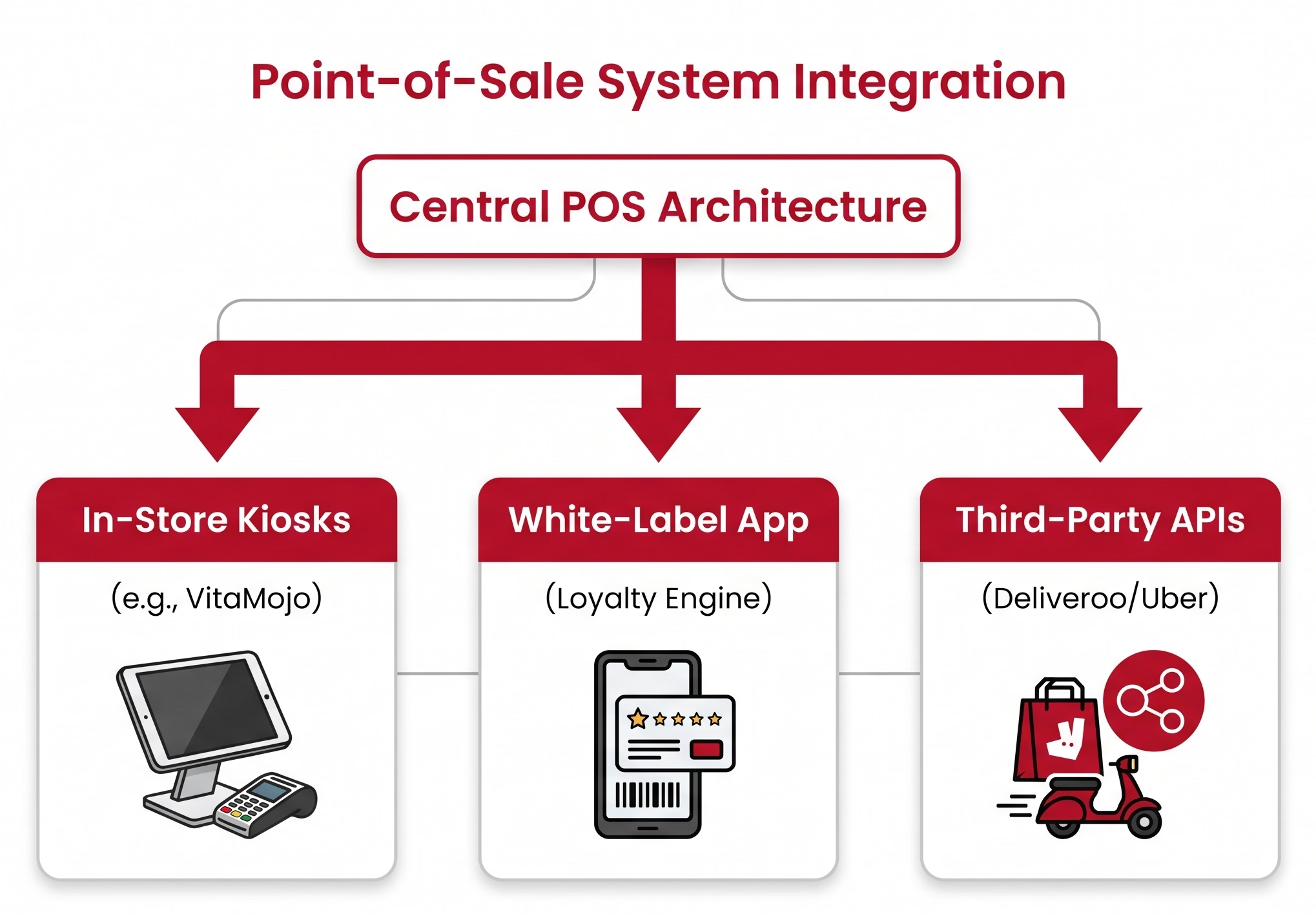
The UK QSR market is deeply reliant on delivery aggregators, with high consumer expectation for seamless, multi-channel tech integration.
The Aggregator Duopoly
Unlike regions with broad aggregator choices, the UK delivery ecosystem is dominated by a clear trio: Deliveroo, Uber Eats, and Just Eat.
- Commissions: Standard commission rates range from 25% to 30% per order unless you negotiate a multi-site corporate exclusivity deal.
- Menu Architecture: Your UK franchise agreement must explicitly state who controls the pricing on aggregator apps. Under the UK Vertical Agreements Block Exemption Order (VABEO), you can enforce corporate standards regarding packaging and menu composition. However, the physical retail price must allow some flexibility to let franchisees protect their local margins against delivery fees.
Kiosk-First High Streets
In-store cashiers are rapidly disappearing on UK high streets. Standard practice for new UK entrants involves integrating self-service digital kiosks (using platforms popular in the UK like Vita Mojo) from day one to optimize labour costs amidst rising minimum wage pressures.
4. Operational Risk: Staffing and “Joint Employment”
Labor dynamics represent a major operational risk for foreign franchisors entering the UK.
- No “Joint Employment” Shield: In the US, the National Labor Relations Board heavily regulates the “joint employer” standard to shield the franchisor from a franchisee’s labour violations. The UK has no such statutory buffer.
- The Worker Status Risk: If your operational manuals are overly restrictive—dictating exact shift patterns, specific staff uniform grooming codes down to minor details, or direct disciplinary policies—UK tribunals can rule that the franchisee’s staff are actually de facto employees of your international parent company.
- Drafting Guardrails: Ensure your training programs and manuals are clearly focused on food safety, brand consistency, and product output metrics, while explicitly leaving HR, hiring, and payroll management to the independent UK franchisee.
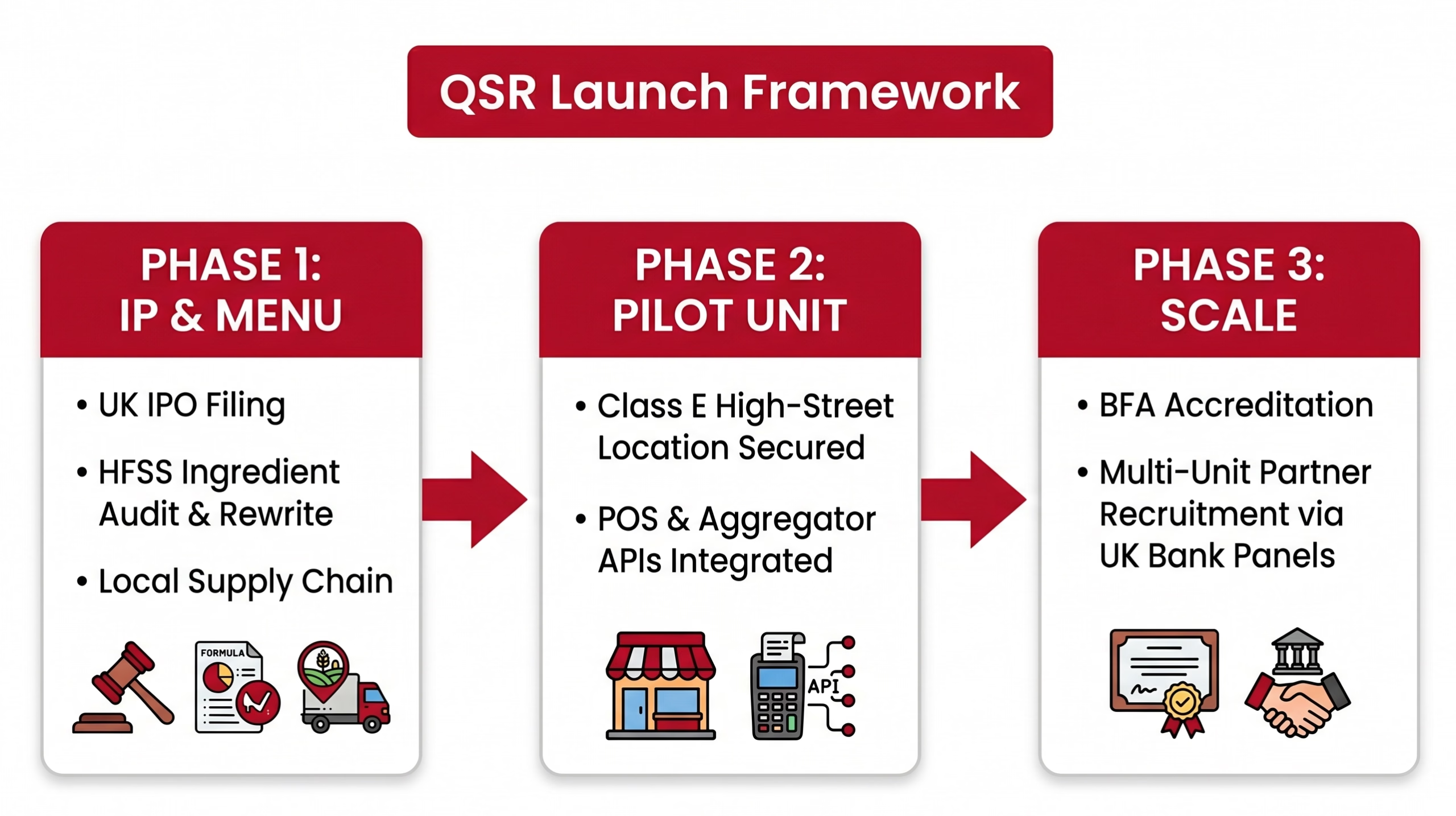
QSR Launch Framework
Ready to start your franchising business? Call our corporate team on +44 (0)20 3588 3500, or press the Enquire button at the top of this page and we will call you back.