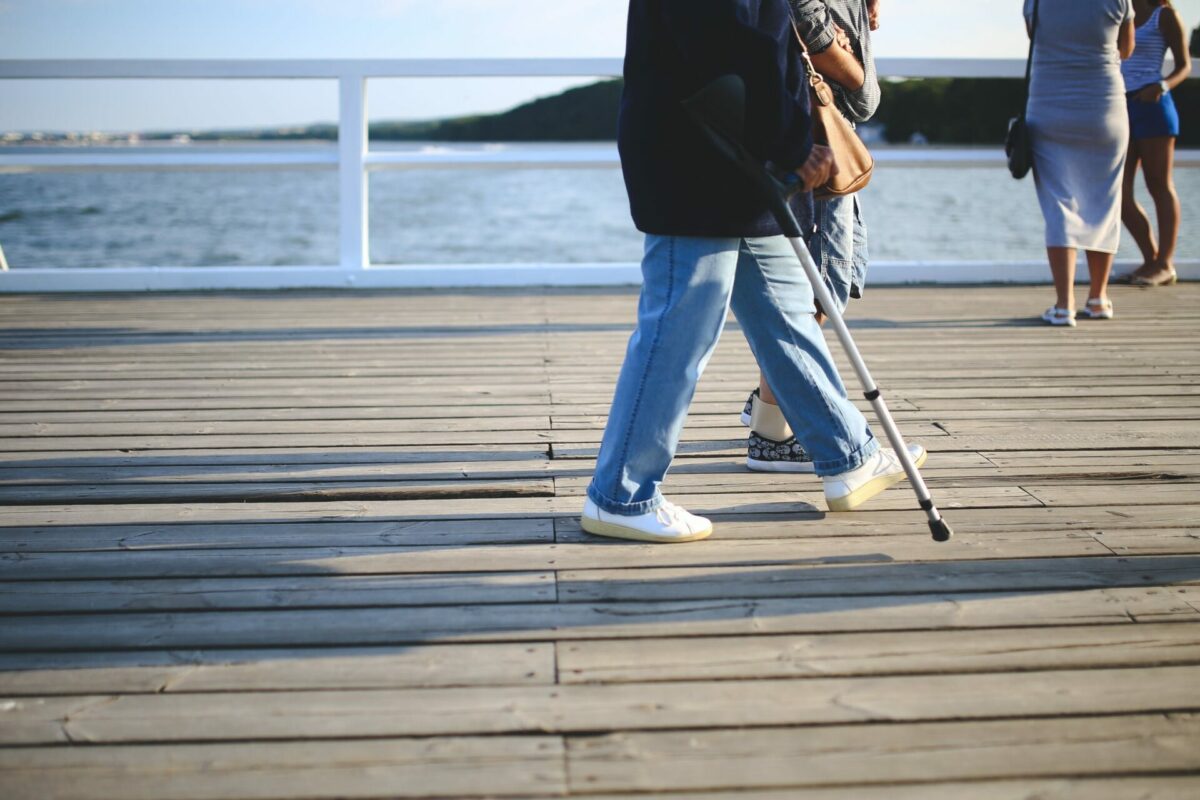
Anyone who has had a limb or extremity amputated will tell you how much they miss being able to do simple tasks quickly, easily and free from pain.
Amputations following an injury can happen to anyone, and the results can be horrifying. In 2016, semi-professional football player and scaffolder, Jamie Mines, lost both his arms below the elbow and both legs after being electrocuted at work. He was holding a tin sheet when it came into contact with overhead wires, sending 33,000 volts through his body, resulting in the 33-year-old flying 13ft through the air. Extraordinarily, he maintains a positive attitude and is learning to live life with the aid of prosthetics[1]. In October 2017, Boundary Scaffolding Limited pleaded guilty to breaching Regulation 2(1) of the Health and Safety at Work and has been fined £80,000 and ordered to pay full costs of £1415. The Managing Director was sentenced to a suspended six-month prison sentence.
How amputations are performed
Amputations have filled people with dread over most of human history. Until very recently, a limb was amputated only as a last resort, to prevent gangrene setting in. This was because no one knew how to prevent the catastrophic blood-loss and infection; common side-effects of an amputation procedure. Speed (and a strong stomach) were crucial to taking off the limb of a terrified patient. And some surgeons became incredibly famous for their abilities to whip off legs and arms with incredible swiftness; Scottish surgeon, Robert Liston, was one of the most well-known – he could remove a limb in under two minutes.
Thankfully, nowadays, an amputation procedure is far from barbaric. Unless the limb has to be taken off immediately to save the victims life, a full consultation and assessment will take place prior to the operation, which mercifully, is today performed under general anaesthetic.
Not only will you be taken through the procedure by a consultant and/or your surgeon, but specialists in prosthetics will also visit you to explain the various types of prosthetic limbs and other devices available to assist your recovery after the amputation procedure.
The home, workplace/school, and any other environments will also be assessed to determine if any modifications and provisions will be needed to be made to ensure you can carry out your tasks of daily living.
Once the limb has been removed, the surgeon may shorten the bone of the remaining limb, to allow it to be covered by soft tissue and muscle. Remaining muscles will be stitched to the bone – this is known as myodesis and makes the remaining limb stronger.
The wound will then be closed with stitches or surgical staples.
Recovery following an amputation
There is no need to fear being in pain after an amputation as you will be provided with adequate pain relief. You may also have a catheter to drain urine from your bladder, so you do not have to get up and go to the toilet.
A compression garment will be fitted to control swelling and manipulate the shape of the stump as it heals. Compression is also used to prevent phantom limb pain.
Rehabilitation
Rehabilitation is an essential part of recovering from an amputation. Should you make a claim for compensation if your limb loss was caused by the negligent act or omission of another, part of the compensation process is to ensure you can access a comprehensive rehabilitation plan as soon as possible.
Rehabilitation can be a long and sometimes frustrating process, but it is essential you stick with it. Working with professionals will help you build up your strength, learn to use a prosthetic limb and transfer yourself, e.g. from the pavement to your car, or your wheelchair to your bed.
Your rehabilitation program will be designed to fit your needs. Occupational therapists and physiotherapists will work with you to set goals for your rehabilitation and be there to support you while you work towards achieving them.
Claiming compensation for an amputation
If an employer, local body, business, or another person (for example the driver of a car) was negligent and that resulted in you having a limb amputated, you may be able to claim compensation.
The first step to take in claiming compensation for an amputation is to talk to a personal injury solicitor who will swiftly establish whether your injury was as a result of negligence which caused you harm.
Most personal injury solicitors, including Saracens Solicitors, offer ‘no win, no fee’ arrangements for personal injury claims. This means, if your case is unsuccessful, you will not have to pay legal fees (although you may have to pay expenses, known as disbursements).
Suffering an injury which results in an amputation is undoubtedly life-changing. Although compensation can never replace what you have lost, it can help you fund your recovery and make adjustments to your living arrangements so that you can live life to the fullest.
Saracens Solicitors is a multi-service law firm based in London’s West End. We have a multi-lingual and highly experienced personal injury law team who have the expertise required to advise and represent you if you wish to claim compensation following an amputation. For more information, please call our office on 020 3588 3500.
[1] http://www.somersetlive.co.uk/news/somerset-news/ive-never-lost-hope-christmas-950326